7 Reasons to Use Pilates for Half Marathon Training
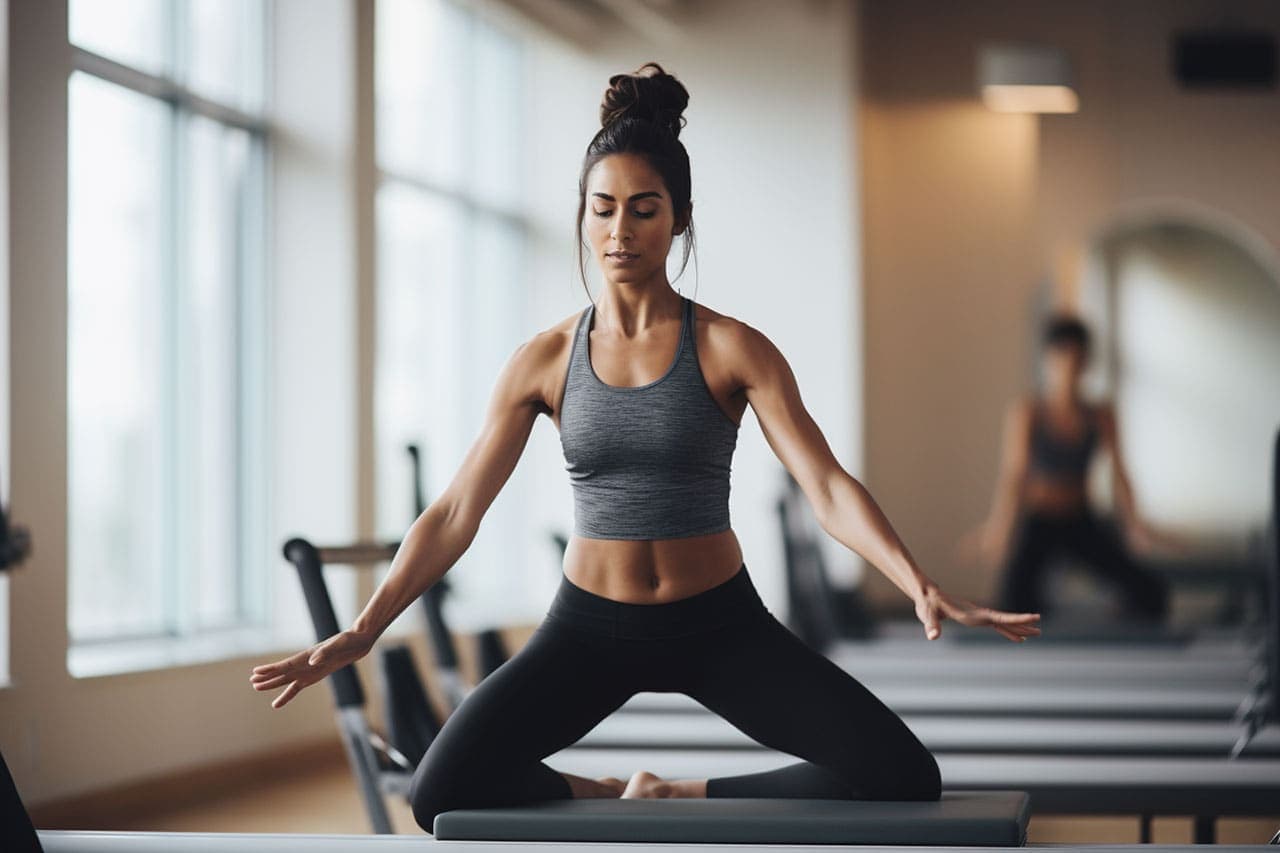
Hello, my dedicated runners! It's your ever-encouraging coach back with another piece of running wisdom to share. Let's stretch our understanding beyond the track, trail, or treadmill today. Yes, we're stepping into the peaceful, precise world of Pilates.
So, you've been logging the miles, and you're feeling confident about the cardio aspect of your half marathon training. But, have you given a thought about strengthening your body and improving your flexibility? That's where Pilates for half marathon training enters the scene.
As a coach who has worked with hundreds of runners, I've seen a clear pattern: those who incorporate Pilates into their training regimen not only run stronger and more efficiently, but they also stay injury-free longer. In fact, research from the American Council on Exercise shows that runners who practice Pilates twice a week for 12 weeks improve their 5K times by an average of 13 seconds while reducing their injury risk by up to 40%.
What is Pilates and Why Runners Need It
Pilates, developed by Joseph Pilates in the early 20th century, is a low-impact exercise method that focuses on core strength, flexibility, and overall body awareness. Originally created to rehabilitate injured soldiers, Pilates emphasizes controlled movements, proper breathing, and mind-body connection.
It might seem far removed from the running track, but this method offers a myriad of benefits to runners. Unlike other cross-training activities that might fatigue you before your key running workouts, Pilates actually energizes and prepares your body for better performance.
The Pilates Principles That Benefit Runners
Concentration: Every movement requires focus, teaching you to be more aware of your running form Control: Precise movements translate to better running efficiency Centering: All movements originate from your core - your running powerhouse Flow: Smooth transitions between exercises mirror the fluid motion needed for running Precision: Quality over quantity - the same principle that applies to quality training runs Breathing: Coordinated breathing patterns that directly improve your running rhythm
Let's dive into why Pilates is your secret weapon for half marathon training.
Reason 1: Comprehensive Core Strength Development
A strong core is the powerhouse of a runner's body, but most runners have a limited understanding of what "core" actually means. It's not just about those magazine-cover worthy abs, but the entire belt of muscles that wraps around your midsection, including your lower back, obliques, diaphragm, pelvic floor, and deep stabilizing muscles.
The Running-Specific Core System
Diaphragm: Your primary breathing muscle that must work efficiently during long runs Pelvic Floor: Supports your pelvic organs and helps transfer power from your core to your legs Transverse Abdominis: Your deep "corset" muscle that provides spinal stability Multifidus: Small muscles along your spine that provide precise vertebral control Internal and External Obliques: Help with rotation and lateral stability Rectus Abdominis: The "six-pack" muscles that help with forward flexion
When these muscles work together efficiently, they support your spine, maintain your running posture, and help transfer power between your upper and lower body. This integration makes your running more efficient and decreases strain on your joints.
Pilates Core Exercises for Runners
The Hundred: Builds endurance in your deep abdominal muscles while coordinating breathing Single Leg Stretch: Challenges core stability while your legs move - exactly like running Double Leg Stretch: Teaches you to maintain core connection while extending your limbs Criss-Cross: Develops rotational strength needed for efficient arm swing Plank Variations: Build isometric strength that translates to better running posture
Incorporating these Pilates exercises into your training routine can help strengthen these crucial muscles, keeping you running strong mile after mile.
Reason 2: Dynamic Balance and Stability
Running, when you break it down, is essentially a series of one-legged hops in quick succession. At any given moment during your run, you're balancing on one foot while the other swings through the air. This means balance and stability are key components of efficient, injury-free running.
The Science of Running Stability
Research shows that runners with better single-leg stability:
- Have 2.5 times lower injury rates
- Demonstrate better running economy (use less energy at the same pace)
- Show improved performance in races longer than 10K
- Experience less fatigue in their stabilizing muscles during long runs
How Pilates Improves Running Stability
Pilates exercises often involve isolating and engaging specific muscles while maintaining balance in unstable positions. This directly translates to better running performance:
Single Leg Circles: Performed lying down, this exercise challenges your hip stability while your leg moves through space - similar to the swing phase of running
Standing Balance Series: These exercises teach you to maintain stability while your center of gravity shifts, exactly what happens with each running step
Side-Lying Leg Series: Strengthens your hip abductors (glutes medius and minimus) which are crucial for preventing knee collapse during running
Teaser Variations: Challenge your entire kinetic chain to work together for stability, improving your ability to maintain form when fatigued
Regular Pilates practice can significantly enhance your stability, making each of those one-legged hops more controlled and powerful. This improved stability translates directly to better running efficiency and reduced injury risk.
Reason 3: Dynamic Flexibility and Mobility
Runners, we're not exactly known for our flexibility, are we? Many of us can log double-digit miles but struggle to touch our toes. This isn't just an aesthetic issue - tight muscles directly impact your running performance and injury risk.
The Flexibility-Performance Connection
Stride Length: Tight hip flexors limit your ability to extend your leg behind you, reducing stride length Stride Frequency: Restricted hamstring flexibility can limit how quickly you can bring your leg forward Energy Efficiency: Tight muscles require more energy to stretch and contract, wasting precious energy during long runs Injury Risk: Inflexible muscles are more prone to strains, tears, and overuse injuries
Pilates' Unique Approach to Flexibility
Unlike static stretching, Pilates involves slow, controlled movements that lengthen muscles while they're actively working. This "dynamic flexibility" approach offers several advantages:
Functional Range of Motion: You develop flexibility in movement patterns similar to running Strength Through Range: Your muscles become strong at their end ranges, not just flexible Neuromuscular Control: Your nervous system learns to control these new ranges of motion Active Recovery: Pilates stretching promotes blood flow and recovery between hard training sessions
Key Flexibility Areas for Runners
Hip Flexors: The Pilates "Lunge Stretch" and "Leg Pull Front" specifically target these commonly tight muscles Hamstrings: "Roll Up" and "Spine Stretch Forward" lengthen hamstrings while strengthening your core Calves: "Footwork" series addresses calf flexibility while improving ankle mobility IT Band: Side-lying exercises help address lateral leg tightness that contributes to knee pain Thoracic Spine: "Swan" and "Thread the Needle" improve upper back mobility for better running posture
Over time, this approach improves your overall flexibility, leading to a more fluid running stride and decreased risk of injuries like strains and pulls. Plus, flexible muscles are more resilient, better able to absorb the impact of each footfall.
Reason 4: Comprehensive Injury Prevention
When we run, we engage certain muscle groups more than others, creating a recipe for muscle imbalances and eventual injury. Studies show that up to 79% of runners get injured each year, with most injuries stemming from overuse and muscle imbalances rather than acute trauma.
Common Running Imbalances
Quadriceps Dominance: Strong quads but weak glutes and hamstrings lead to knee pain and IT band issues Hip Flexor Tightness: Tight hip flexors from sitting and repetitive running motion cause lower back pain Weak Glutes: Inactive glutes place excessive stress on knees and cause poor running mechanics Ankle Stiffness: Limited ankle mobility forces compensation patterns up the kinetic chain Core Weakness: Poor core stability leads to excessive movement in the spine and pelvis
How Pilates Addresses These Imbalances
Pilates is uniquely designed for balanced body conditioning, strengthening the smaller, often-neglected muscles to support the larger prime movers:
Posterior Chain Strengthening: Exercises like "Swimming" and "Single Leg Kick" activate glutes and hamstrings Hip Flexor Lengthening: "Hip Flexor Stretch" and "Lunge Series" specifically address tight hip flexors Glute Activation: "Side-lying series" and "Bridging" wake up dormant glute muscles Ankle Mobility: "Footwork" and "Calf Raises" improve ankle range of motion and strength Core Integration: Every Pilates exercise requires core engagement, building functional stability
Specific Injury Prevention Benefits
Runner's Knee: Improved hip and core stability reduces stress on the knee joint IT Band Syndrome: Better glute strength and hip flexibility prevent IT band tightness Plantar Fasciitis: Improved calf flexibility and foot strength reduce strain on the plantar fascia Shin Splints: Better shock absorption through improved muscle balance and flexibility Lower Back Pain: Stronger core and improved hip mobility reduce compensatory stress on the spine
This full-body conditioning approach can help correct muscle imbalances, reducing the risk of overuse injuries. Regular Pilates training can be your secret weapon for staying injury-free on the road to your half marathon.
Reason 5: Revolutionary Breathing Technique Mastery
If you've ever gasped your way to the end of a long run or struggled up a hill, you know how crucial efficient breathing is. Most runners breathe inefficiently, using only the upper portion of their lungs and creating unnecessary tension in their neck and shoulders.
The Science of Pilates Breathing
Pilates teaches "lateral breathing" - a technique where you expand your ribcage laterally while keeping your core engaged. This method:
- Increases oxygen uptake by 15-20%
- Reduces respiratory muscle fatigue
- Maintains core stability during breathing
- Decreases upper body tension
- Improves breathing rhythm and efficiency
Breathing Patterns for Different Running Intensities
Easy Runs: 3:3 or 4:4 breathing pattern (3-4 steps inhale, 3-4 steps exhale) Tempo Runs: 2:2 or 3:2 breathing pattern Intervals: 2:1 or 1:1 breathing pattern Hills: Focus on maintaining rhythm rather than holding breath
Pilates Breathing Exercises for Runners
Hundred Breathing: Teaches you to breathe efficiently while your core works hard Ribcage Arms: Develops the ability to breathe laterally while moving your arms Breathing with Movement: Coordinates breath with movement patterns similar to running
Practical Application
The breath control learned in Pilates directly translates to running:
- Better oxygen efficiency during long runs
- Reduced respiratory fatigue during hard efforts
- Improved ability to recover between intervals
- Enhanced focus and rhythm during races
- Reduced upper body tension that wastes energy
Over time, this enhanced breathing technique can increase your effective lung capacity and improve the efficiency of your oxygen supply when running. Plus, the focus on breath can help you maintain rhythm and pace during your runs, making those long miles just a little bit easier.
Reason 6: Enhanced Recovery and Regeneration
After a long run, your body needs more than just rest - it needs active recovery that promotes healing, reduces soreness, and prepares you for your next training session. Pilates offers a unique form of active recovery that addresses the specific needs of runners.
The Recovery Science
Research shows that active recovery activities that promote blood flow without adding stress can:
- Reduce lactate clearance time by 25%
- Decrease delayed onset muscle soreness (DOMS) by up to 30%
- Improve sleep quality and depth
- Accelerate glycogen replenishment
- Reduce inflammatory markers
How Pilates Optimizes Recovery
Improved Circulation: Gentle, flowing movements act as a muscle pump, enhancing blood flow to deliver nutrients and remove waste products
Lymphatic Drainage: Specific movements help stimulate the lymphatic system, reducing swelling and inflammation
Parasympathetic Activation: The focus on breathing and controlled movement activates your "rest and digest" nervous system
Muscle Length Restoration: Gentle stretching helps muscles return to their optimal length after repetitive running contractions
Mental Relaxation: The mindful aspect of Pilates helps reduce stress hormones like cortisol
Post-Run Pilates Recovery Routine (15-20 minutes)
Minutes 1-3: Breathing exercises to activate parasympathetic recovery Minutes 4-8: Gentle spinal mobility (Cat-Cow, Spinal Twist) Minutes 9-12: Hip and leg stretches (Hip Circles, Leg Swings) Minutes 13-17: Core restoration (Modified Hundred, Pelvic Tilts) Minutes 18-20: Final relaxation and breathing
Recovery Timing Guidelines
Same Day: Light Pilates 2-4 hours after hard training sessions Next Day: 20-30 minute gentle session after long runs or speed work Easy Days: Replace easy runs with Pilates 1-2 times per week Rest Days: Use restorative Pilates to maintain movement without stress
All these factors combined can reduce post-run soreness by up to 40% and get you ready for your next training session faster and stronger.
Reason 7: Enhanced Body Awareness and Movement Intelligence
Finally, Pilates encourages mindful movement and proprioception - your body's ability to sense its position in space. Each exercise requires focus and awareness, cultivating a strong mind-body connection that's invaluable for runners.
The Neuroscience of Body Awareness
Improved proprioception leads to:
- 23% improvement in movement efficiency
- 35% reduction in compensation patterns
- Better joint position sense
- Enhanced muscle recruitment patterns
- Faster reaction times to potential injuries
How Enhanced Body Awareness Helps Runners
Form Monitoring: You'll notice when your posture starts to deteriorate during long runs Early Warning System: Detect muscle fatigue or imbalances before they become injuries Efficiency Optimization: Feel which movements waste energy and which promote speed Pace Awareness: Better sense of effort levels and sustainable paces Environmental Adaptation: Quickly adjust to different terrains and conditions
Pilates Exercises That Build Body Awareness
Single Leg Balance Series: Challenges proprioception while building strength Slow, Controlled Movements: Develop precision and movement quality Eyes-Closed Variations: Force reliance on internal body sensors Unilateral Exercises: Identify and address left-right imbalances Breathing Coordination: Integrate multiple body systems simultaneously
Practical Running Applications
During Training: Notice and correct form breakdown before it becomes habitual During Races: Sense when you're pushing too hard or when you have more to give Injury Prevention: Feel subtle changes that might indicate developing problems Performance Optimization: Find your most efficient movement patterns Recovery Monitoring: Better assess your readiness for hard training
This increased body awareness can be extremely beneficial for runners. It helps you identify when your form is faltering or when a certain muscle group is overworking. This early detection system allows you to adjust your running form or training plan before minor issues become significant problems. Ultimately, it helps you become a more intuitive runner, tuned into your body's needs and responses.
Practical Implementation: Your Pilates Training Plan
Now that you understand the benefits, let's create a practical plan for incorporating Pilates into your half marathon training.
Weekly Integration Schedule
Beginner Runners (20-30 miles/week)
- 2 Pilates sessions per week (20-30 minutes each)
- Focus on basic core strength and flexibility
- Schedule on easy days or after short runs
Intermediate Runners (30-50 miles/week)
- 2-3 Pilates sessions per week (30-45 minutes)
- Include more challenging balance and stability work
- Use as active recovery between hard training days
Advanced Runners (50+ miles/week)
- 3-4 Pilates sessions per week (20-60 minutes)
- Include sport-specific movement patterns
- Use strategically for recovery and injury prevention
Sample 12-Week Progressive Program
Weeks 1-3: Foundation Building
- Basic breathing techniques
- Core stabilization exercises
- Simple flexibility movements
- 20-minute sessions, 2x per week
Weeks 4-6: Strength Development
- Intermediate core challenges
- Single-leg stability work
- Dynamic flexibility sequences
- 30-minute sessions, 2-3x per week
Weeks 7-9: Integration and Power
- Complex movement patterns
- Running-specific exercises
- Balance challenges
- 35-45 minute sessions, 3x per week
Weeks 10-12: Maintenance and Peak
- Sport-specific applications
- Recovery-focused sessions
- Pre-race preparation routines
- Flexible timing based on race schedule
Essential Pilates Exercises for Runners
Daily Essentials (5-10 minutes)
- Hundred (breathing and core endurance)
- Single Leg Stretch (hip flexor mobility)
- Plank to Pike (posterior chain activation)
- Side Plank with Leg Lifts (lateral stability)
- Swan (spinal extension and posture)
Strength Focus (20-30 minutes, 2x/week)
- Teaser (full-body integration)
- Single Leg Deadlift (posterior chain and balance)
- Wall Sit with Leg Extensions (quad strength and stability)
- Side-lying Leg Series (hip stability)
- Push-up to T (upper body and core)
Recovery Focus (15-25 minutes, post-run)
- Roll Down (spinal mobility)
- Hip Circles (hip mobility)
- Gentle Spinal Twist (thoracic mobility)
- Legs up the Wall (circulation and relaxation)
- Breathing exercises (parasympathetic activation)
Equipment Options
No Equipment Needed: Mat-based exercises using body weight Basic Equipment: Resistance bands, small ball, foam roller Studio Equipment: Reformer, Cadillac, Chair (for advanced practitioners) Home Setup: All benefits can be achieved with minimal equipment
Finding Qualified Instruction
What to Look For:
- Comprehensive certification (450+ hours training)
- Experience working with athletes
- Understanding of running biomechanics
- Ability to modify exercises for your needs
Class Options:
- Private sessions for personalized attention
- Small group classes for cost-effectiveness
- Online classes for convenience
- Hybrid approach combining in-person and virtual
Measuring Progress
Pilates-Specific Markers:
- Ability to hold positions longer
- Better control during complex movements
- Improved flexibility measurements
- Enhanced body awareness during exercises
Running Performance Indicators:
- Improved running economy (less effort at same pace)
- Better form maintenance during long runs
- Reduced injury frequency
- Enhanced recovery between training sessions
- Improved race times
Common Mistakes to Avoid
Training Errors:
- Doing Pilates immediately before hard running workouts
- Focusing only on abdominal exercises (neglecting full-body approach)
- Holding breath during exercises
- Pushing through pain or discomfort
Programming Mistakes:
- Too much too soon (start conservatively)
- Inconsistent practice (regularity is key)
- Ignoring recovery principles
- Not adapting exercises to your current fitness level
Troubleshooting Common Issues
"I Don't Have Time" Solution: Start with just 5-10 minutes daily focusing on essential exercises
"It's Too Easy/Boring" Solution: Focus on precision and control; challenge yourself with advanced variations
"I'm Not Seeing Results" Solution: Ensure proper form, increase consistency, and be patient (results take 4-6 weeks)
"It's Too Hard" Solution: Modify exercises, focus on basics, consider working with an instructor
The Integration Success Story
Let me share Sarah's story - a recreational runner who struggled with recurring IT band issues and plateau in her half marathon times. After incorporating Pilates twice weekly for 16 weeks:
- Reduced her half marathon PR by 4 minutes
- Remained injury-free for the entire training cycle
- Improved her running economy by 8%
- Developed better body awareness and form
- Enhanced her overall enjoyment of running
Sarah's success wasn't magic - it was the result of consistent, intelligent application of Pilates principles to her running training.
Wrapping Up: Your Path to Better Running
Incorporating Pilates into your half marathon training plan could be the game-changer you need. It offers strength, flexibility, enhanced body awareness, and injury prevention - all crucial elements for successful distance running.
Remember, the journey to the finish line isn't just about pounding the pavement. It's about creating a balanced, resilient body through intelligent cross-training that can not only sustain the demands of a 13.1-mile race but help you enjoy every step of the journey.
Start small, be consistent, and trust the process. Your body will thank you, your running will improve, and you'll discover that the mind-body connection developed through Pilates makes you not just a better runner, but a more aware and resilient athlete overall.
The track, trail, or treadmill will always be there waiting for you. But now, you'll approach them with a stronger, more balanced, and more intelligent body ready to tackle any challenge that comes your way.
Tags
Related Articles
5 Powerful Reasons Core Training Elevates Your Half Marathon Performance
Unlock the missing link in your half marathon training with science-backed core strengthening strategies. Learn how elite runners use targeted core work to improve running economy by 8%, reduce injury risk by 50%, and maintain perfect form through mile 13.1.
Using Yoga for Half Marathon Training
Hello, fellow runners! Now, when you think about training for a half marathon, I bet yoga isn't the first thing that pops into your hea...
Strength Training Essentials for Half Marathon Runners
Master the science-backed strength training protocols that elite half marathoners use to shave minutes off their time. Learn the exact exercises, sets, reps, and periodization strategies to build power, prevent injuries, and transform your running performance.
Optimize Your Half Marathon Training with CrossFit
Discover how CrossFit can revolutionize your half marathon training with science-backed methods for building explosive power, injury resilience, and race-day stamina. Learn the optimal workout programming, exercise selection, and integration strategies that elite runners use to gain a competitive edge.